
You have probably heard the word microdosing. Maybe it came up over coffee. Maybe it crossed your social feed. Or maybe someone you know mentioned it, and they seemed a little more like themselves afterwards.
Now you are here, curious about whether it is for you. That curiosity is worth following. So let us start with the basics. What is microdosing, really?
What is microdosing?
The word microdosing traditionally describes taking a very small, sub-perceptual dose of a substance. Sub-perceptual simply means you do not feel a strong or altered effect.
It is a term people most often link with psychedelics, and it is natural to be curious about that. Here we want to be honest with you. The best controlled studies so far suggest that much of the reported benefit of psychedelic microdosing may come from expectation rather than the substance itself. It is also worth knowing that psilocybin remains a controlled, illegal substance in South Africa. If you have questions about any of this, you are welcome to ask us. We would rather you had honest answers than guesswork.
Microdosing functional mushrooms
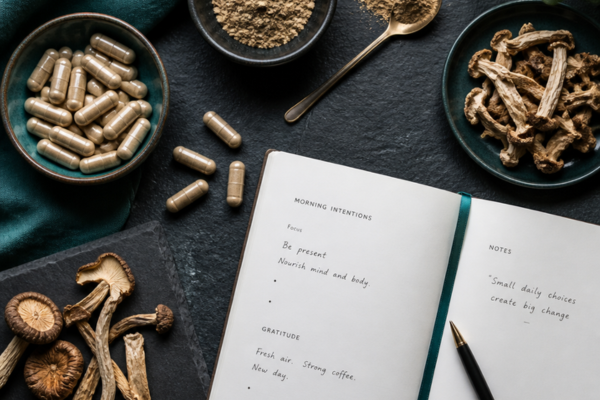
Our own focus sits somewhere gentler and entirely legal. When we talk about microdosing functional mushrooms, we mean taking small, daily amounts of mushrooms such as lion’s mane, reishi, and cordyceps. These are not psychedelics. They are better described as supplementation, and everything we sell is non-psychoactive. At Mindful Microdosing, we keep that distinction clear, always.
Where does the use of mushrooms come from?
Using mushrooms for wellbeing is not new. In fact, it is hard to say how old the practice really is. Many traditional healing systems have viewed mushrooms as valuable tools for wellbeing, and some cultures still use them today.
Modern research into functional mushrooms is also growing. Early studies suggest mushrooms such as lion’s mane and reishi may support brain, immune, and nervous system function. However, much of this evidence is still preliminary, and scientists need more research before drawing firm conclusions. You can read a peer-reviewed overview of the bioactive compounds in medicinal mushrooms if you would like to go deeper.
What microdosing functional mushrooms is not
It helps to be clear here. Functional mushrooms are not a cure, and they are not a shortcut. They are not a replacement for medical care or therapy. They also cannot do the deep inner work that real healing asks of us.
Because they are supplements rather than medicines, they should not replace anything your doctor prescribes. Instead, think of them as one part of a wider, holistic health practice. Approached with intention and care, they can be a gentle support, helping you feel a little more grounded and present.
Who are functional mushrooms for?
The right choice depends on what you are looking for:
- For clarity and focus, people often explore lion’s mane.
- For stress and rest, reishi is a common starting point.
- For steady energy, cordyceps is worth getting to know.
Remember, though, that natural does not mean weak. These mushrooms are powerful in their own quiet way, so use them with a mindful, considered approach. And if you are unsure whether they are right for you, speak to your healthcare provider first.
If you feel drawn to explore further, read our beginner’s guide to building a mindful microdosing practice.
Disclaimer: This post is for educational purposes only and does not constitute medical advice. Always consult a qualified healthcare provider before beginning any new supplement or wellness practice
Take it slowly, and be kind to yourself along the way. — Wendy 💚